
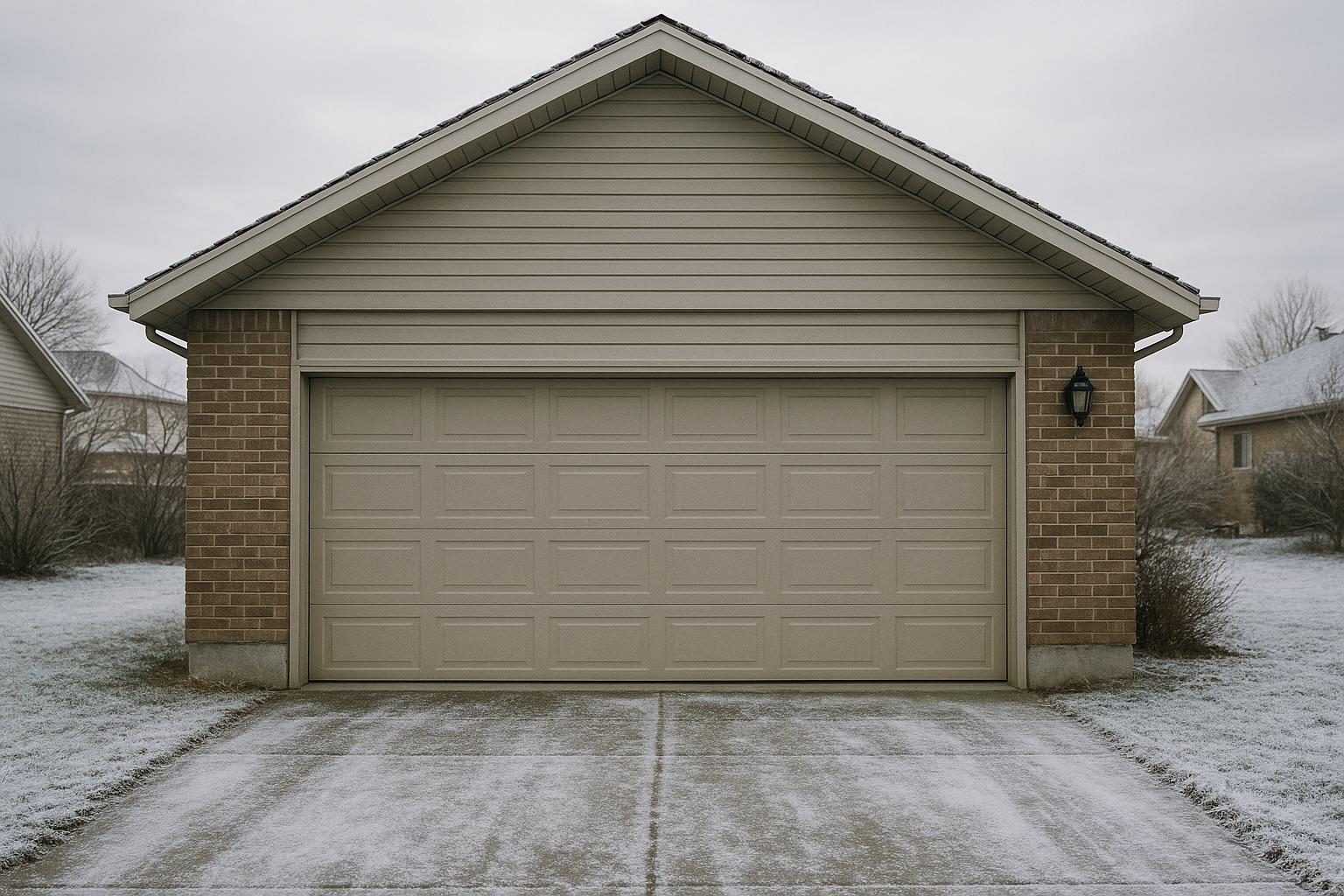
Winter and Your Garage Door Don't Always Get Along
If you've lived in Spanish Fork for even one winter, you know how cold it gets. Temperatures regularly dip below freezing from November through March, and that kind of cold can do a number on your garage door. One morning everything works fine. The next morning you're pressing the button and nothing happens — or worse, the door gets halfway up and stops.
It's one of the most common calls we get during the winter months. The good news is that most cold-weather garage door problems have straightforward causes and solutions. Here's what you need to know so you're not stuck outside (or inside) when the temperature drops.
Why Cold Weather Affects Your Garage Door
Your garage door is a mechanical system made up of metal springs, metal tracks, rubber seals, lubricant, and an electric opener. Every single one of those components reacts to cold temperatures. When you understand what's happening, it's a lot easier to troubleshoot the issue — or prevent it from happening in the first place.
1. Metal Contracts in the Cold
This is basic physics, but it matters more than most people realize. When temperatures drop, the metal components of your garage door system — the tracks, springs, and hardware — contract slightly. That contraction can cause:
- Increased friction between the door and the tracks
- Springs that feel tighter or more brittle
- Hinges and rollers that don't move as freely
In most cases, this just means the door feels a little sluggish. But if your system was already borderline — maybe the springs were nearing the end of their life or the tracks were slightly misaligned — the cold can push things past the tipping point.
2. Lubricant Thickens or Hardens
The grease and lubricant on your springs, rollers, and tracks can thicken significantly in freezing temperatures. When lubricant gets thick and stiff, it creates resistance instead of reducing it. Your opener has to work harder to move the door, and in some cases, it simply can't generate enough force to get the job done.
3. Weatherstripping Freezes to the Ground
This is probably the most common winter garage door issue we see in Spanish Fork. The rubber weatherstripping along the bottom of your garage door can freeze directly to the concrete floor or driveway, especially after snow melts and refreezes overnight. When you hit the button, the opener tries to lift the door, but the frozen seal holds it down. The opener's safety features detect the resistance and stop the motor — or reverse the door entirely.
4. Your Opener Struggles in Extreme Cold
Garage door openers are designed to work within a certain temperature range. While most modern openers handle cold weather reasonably well, older units or units that are already wearing out may not generate enough power when temperatures plummet. The motor may hum without moving the door, or it may trip its own overload protection and shut off.
How to Fix a Frozen or Stuck Garage Door
Before you call for help, there are a few things you can safely try on your own.
Break the Seal Gently
If you suspect the weatherstripping is frozen to the ground, do not just keep hitting the opener button. That can burn out the motor or damage the door. Instead, try these steps:
- From inside the garage, gently tap along the bottom of the door with a rubber mallet or the heel of your hand to break the ice seal.
- If that doesn't work, pour warm (not boiling) water along the base of the door where it meets the floor.
- Once the seal breaks free, open the door and clear away any remaining ice or water so it doesn't refreeze.
Lubricate Moving Parts with a Cold-Weather Lubricant
Standard garage door grease doesn't perform well in freezing conditions. Switch to a silicone-based garage door lubricant, which stays effective at much lower temperatures. Apply it to the springs, hinges, rollers, and tracks. This one step alone can make a dramatic difference in how smoothly your door operates during winter.
Check the Tracks for Ice or Debris
Moisture can accumulate in your garage door tracks and freeze overnight. Take a look at the tracks on both sides and clear out any ice buildup. A hair dryer or heat gun on a low setting works well for this — just be careful around any plastic components.
Test the Door Manually
Pull the emergency release cord (the red handle hanging from the opener rail) to disconnect the door from the opener. Then try lifting the door by hand. If it moves smoothly, the problem is likely with the opener. If it's heavy, stiff, or won't budge, the issue is mechanical — possibly the springs, tracks, or frozen components.
Important: If the door feels extremely heavy when you try to lift it manually, don't force it. That usually means a spring has broken or lost tension, and attempting to operate the door without functioning springs can be dangerous.
How to Prevent Cold-Weather Garage Door Problems
A little prevention goes a long way, especially here in Utah where we get several months of freezing weather every year.
- Schedule fall maintenance. Having a professional inspect and tune up your garage door before winter hits is the single best thing you can do. We check spring tension, lubricate all moving parts with cold-rated lubricant, inspect the weatherstripping, and make sure the opener is running at full capacity.
- Replace worn weatherstripping. Old, cracked weatherstripping is more likely to absorb water and freeze to the ground. Fresh weatherstripping seals better and releases more easily.
- Keep the area around the door clear. Shovel snow away from the base of your garage door and make sure water isn't pooling where the door meets the ground.
- Insulate your garage. An insulated garage door and a reasonably sealed garage keep temperatures above freezing inside, which reduces the chance of frozen components and frozen weatherstripping.
- Don't ignore small problems. A door that's a little slow or a little noisy in October can become a door that won't open at all in January. Address minor issues before winter makes them worse.
When to Call a Professional
Some cold-weather garage door problems are easy DIY fixes. Others are not. You should call a professional if:
- The door won't open manually and feels extremely heavy
- You notice a broken spring (look for a gap in the coil above the door)
- The opener motor runs but the door doesn't move
- The door is visibly off-track or crooked
- You've tried the basic fixes above and the problem persists
Garage door springs are under extreme tension and can cause serious injury if handled incorrectly. Track and opener issues can also get worse quickly if you try to force the door to operate. When in doubt, it's safer and usually cheaper in the long run to have someone take a look.
Stay Ahead of Winter in Spanish Fork
Cold-weather garage door problems are frustrating, but they're also predictable. If you take a few simple steps before the first hard freeze, you'll save yourself a lot of headaches — and a lot of cold mornings standing in your driveway wondering why the door won't budge.
At Spanish Fork Garage Door, we help homeowners across Spanish Fork, Springville, Payson, and the surrounding area get their garage doors winter-ready. Whether you need a quick tune-up, a spring replacement, or emergency service when something goes wrong, we're here to help. Give us a call and we'll get it taken care of.