
The Cost of Waiting Another Season
A noisy garage door rarely fixes itself. Left alone through a Utah County winter, a grinding roller can wear a dent into your track, a squealing hinge can seize up once the grease finally dries out in our low-humidity air, and loose hardware that rattles in October can shake itself free enough to let a panel sag by January. What starts as a quick lubrication job in the fall often turns into a full roller and track repair once the swing between a 20-degree night and a 50-degree afternoon has done its work on worn metal. Ignore it long enough, and you're looking at a dead opener or a failed spring on the coldest morning of the year — exactly when you can't afford to be stuck outside.
Four Noises, Four Different Stories
Grinding
A harsh, metal-on-metal grinding sound as the door moves usually means something is rubbing where it shouldn't. It's often loudest right as the door starts or stops, and it tends to get worse week to week rather than staying the same.
Squealing
A high-pitched squeal, almost like a dry hinge, is the classic sound of friction without lubrication. Dry mountain air pulls moisture out of grease faster than most homeowners expect, so a door that was fine in spring can start squealing with the first real cold snap.
Popping or Banging
A sharp pop or bang — sometimes a single loud noise, sometimes a few in a row — is different from a steady noise. It signals a sudden release of tension or a shift in hardware, not ongoing friction.
Rattling
A looser, shaking rattle throughout the door's full travel, especially noticeable on windy days or during the first few feet of opening, usually points to hardware that's come loose rather than a worn moving part.
What a Technician Checks, and in What Order
When we get a call about a noisy door, we don't jump straight to the worst-case repair. We work through the likely causes from simplest to most involved, because that's the order they actually tend to occur in on a real door.
1. Hardware and Fasteners
Every cycle flexes the door slightly, and repeated freeze-thaw swings loosen nuts, bolts, and hinge screws faster than you'd think. This is the first thing checked because it's the most common cause of rattling and the cheapest to fix — a few minutes with a socket wrench to snug up hinges, roller brackets, and track bolts.
2. Rollers and Hinges
Next we look at the rollers themselves. Nylon rollers wear out over years of use and start to squeal or grind as the bearings dry or crack; older steel rollers without nylon bearings are naturally louder and get worse with age. Lack of lubrication is the quick fix — a garage-door-specific lubricant on rollers and hinges, not a general spray lubricant, which can strip grease rather than replace it. A cracked bearing or chipped wheel needs replacement, not just oil.
3. Track Alignment
If grinding or popping continues after lubrication, we check whether the tracks are still parallel and properly spaced from the door. A bent track, a loose bracket, or a track pulled slightly away from the wall will cause rollers to bind and grind as they pass the misaligned section. The fix is loosening the track bolts and tapping the track back into alignment, or replacing a section if it's visibly bent.
4. Springs and Cables
A single loud pop, especially when the door isn't moving, often means a torsion spring losing tension or a cable slipping off a drum. This gets checked carefully and from a distance, since torsion springs hold serious tension. A worn or separating spring needs full replacement, not a patch job.
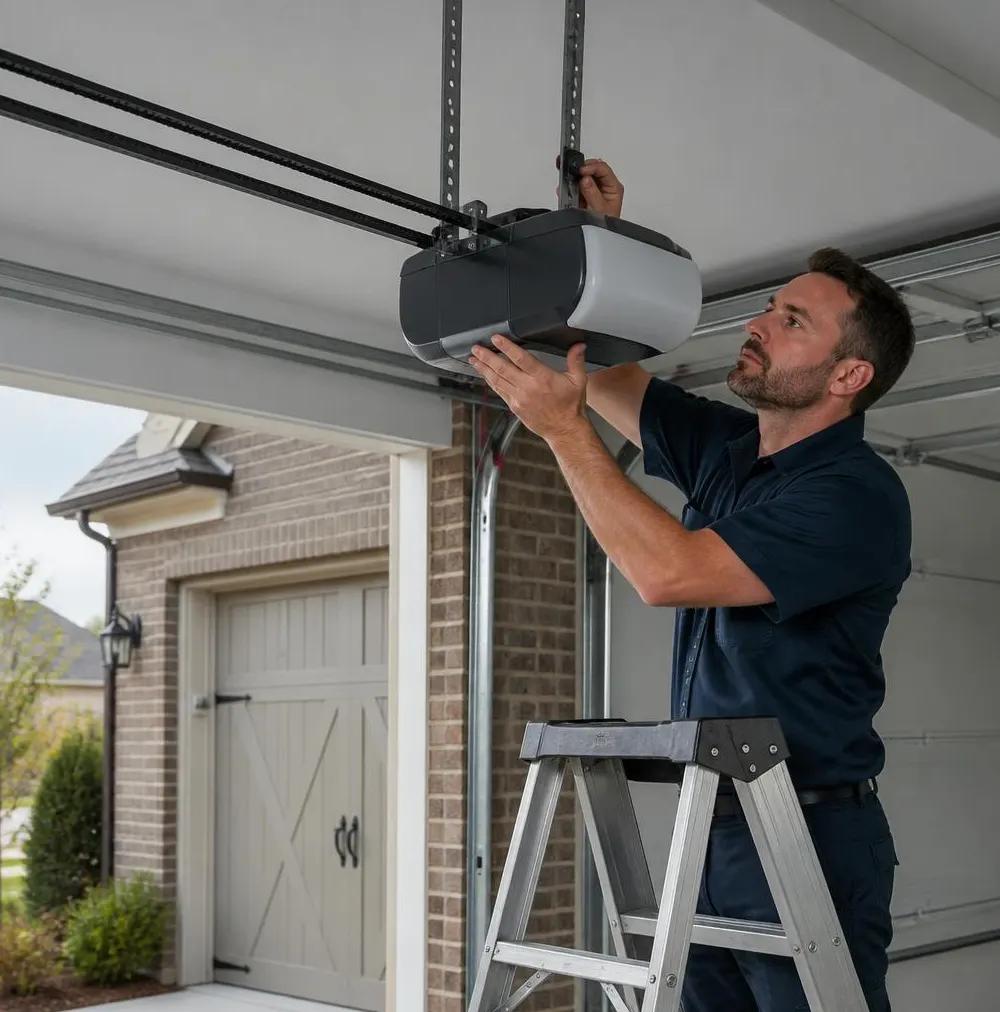
5. The Opener
If the noise is a grinding or whining sound coming specifically from the motor unit rather than the door itself, the opener's gears or drive mechanism are usually the cause. Chain-drive openers rattle as the chain stretches with age; belt-drive openers can squeal if the belt slips. Depending on the opener's age, this means either a gear kit replacement or, if the unit has been in service a long time, a full opener swap.
When to Call Spanish Fork Garage Door
If tightening hardware and a basic lubrication don't quiet things down within a cycle or two, it's worth getting a technician out before winter settles in for good. Our Garage Door Maintenance visits cover exactly this kind of diagnostic work — hardware, rollers, track alignment, and lubrication — and if the noise points to something bigger, we can move straight into Opener Repair & Installation or Spring Replacement without a second appointment. We serve Spanish Fork, Springville, Mapleton, Salem, Payson, Provo, Orem, and Elk Ridge, and we'd rather track down a squeal in October than get called out for an emergency repair during a snowstorm.
If your garage door has started grinding, squealing, popping, or rattling, call Spanish Fork Garage Door today and get it sorted out before the cold really sets in.